
 Events & Tickets

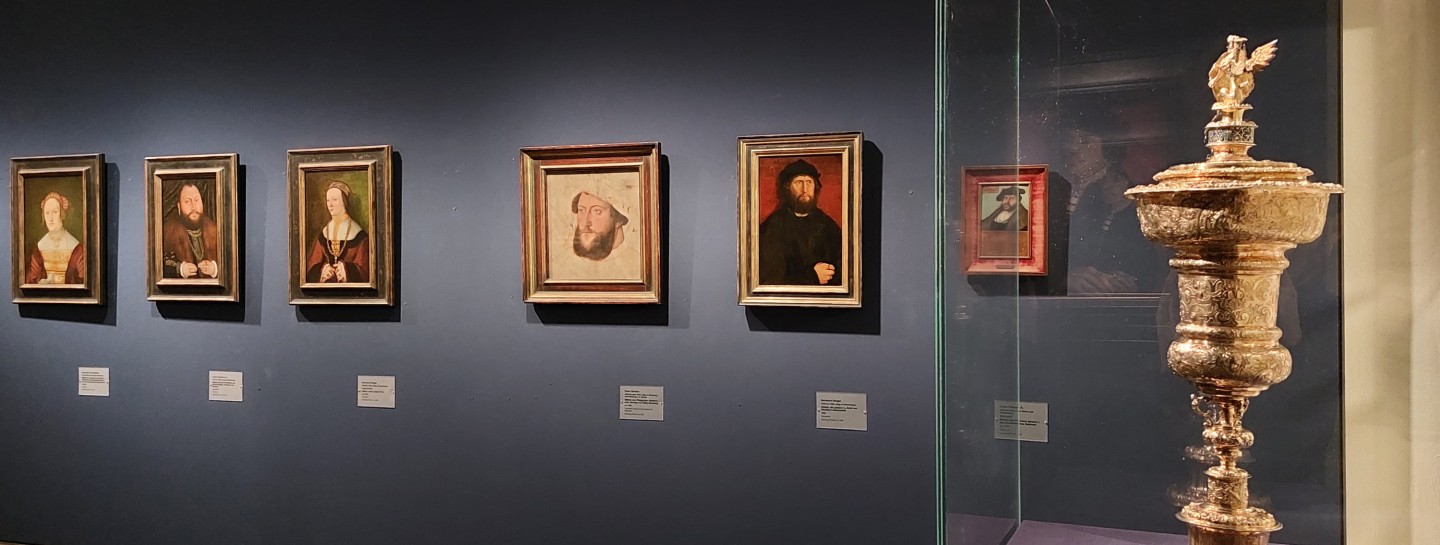
Its size, elaborate craftsmanship, and historical significance make the Hereditary Cupbearer Cup an exceptional work of art. In 1562, Christoph III of Limpurg-Gaildorf, Hereditary Cupbearer of the Holy Roman Empire, presented the cup to Maximilian II (1527–1576), King of Bohemia and Archduke of Austria, on the occasion of the latter’s coronation as King of Germany in Frankfurt.
It was tradition that the cupbearer safeguarded the cup, and it was therefore brought to the Old Castle of Gaildorf, where the Counts of Limpurg resided.
As an exquisite piece of goldsmiths’ craftsmanship, the Cup would have been a splendid ornament in any cabinet of curiosities or a so-called "Kunstkammer" of the time. These early modern collection rooms enjoyed great popularity at the princely courts of Europe in the 16th and 17th century. They were conceived as mirrors of the cosmos and repositories of the rapidly expanding knowledge of the world. As a result, they comprised nearly everything deemed important in their time: gold and silver, books from every branch of learning, astronomical devices, richly decorated tankards, finely turned ivory pieces and many other objects. Such works of art also rank among the most remarkable treasures in the Würth Collection, on display in the “Kunstkammer Würth” at the Bode Museum in Berlin.
The Würth Collection’s Hereditary Cupbearer Cup is believed to be the only surviving goblet verifiably used at the coronation of a king, thus making it a historical document of the utmost significance.


 read more
 read less


